Showing posts with label block cancer metastasis. Show all posts

600 Reasons Turmeric May Be The World’s Most Important Herb

555,555READERS
By Sayer Ji • Originally published on Greenmed.info
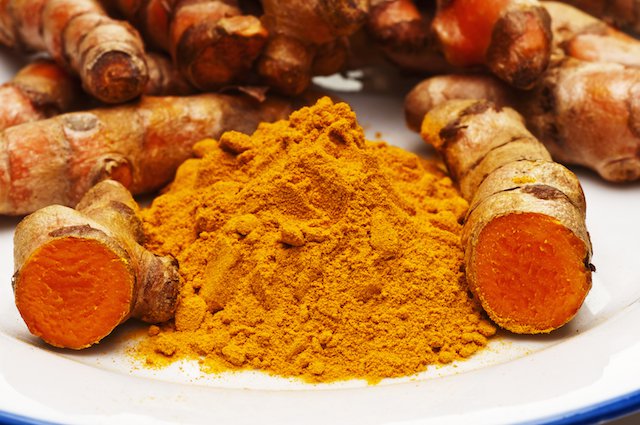
There is a medicinal spice so timelessly interwoven with the origins of human culture and metabolism, so thoroughly supported by modern scientific inquiry, as to be unparalleled in its proven value to human health and well-being.
Indeed, turmeric turns the entire drug-based medical model on its head. Instead of causing far more side effects than therapeutic ones, as is the case for most patented pharmaceutical medications, turmeric possesses hundreds of potential side benefits, having been empirically demonstrated to positively modulate over 160 different physiological pathways in the mammalian body.
While no food or herb is right for everyone, and everything has the potential for unintended, adverse side effects, turmeric is truly unique in its exceptionally high margin of safety vis-à-vis the drugs it has been compared with, e.g. hydrocortisoneibuprofenchemotherapy agents. Furthermore, nothing within the modern-day pharmaceutical armamentarium comes even remotely close to turmeric’s 6,000 year track record of safe use in Ayurvedic medicine.
Despite its vast potential for alleviating human suffering, turmeric will likely never receive the FDA stamp of approval, due to its lack of exclusivity, patentability and therefore profitability. Truth be told, the FDA’s “gold standard” for proving the value of a prospective medicinal substance betrays the age old aphorism: “he who owns the gold makes the rules,” and unless an investor is willing to risk losing the 800+ million dollars that must be spent upfront, the FDA-required multi-phased double-blind, randomized clinical trials will not occur. For additional details on this rather seedy arrangement read my article on the topic: Why The Law Forbids The Medicinal Use of Natural Substances.
At GreenMedInfo.com, we have reviewed over 5,000 study abstracts from the National Library of Medicine’s bibliographic database known as MEDLINE and have discovered over 600 potential health benefits of turmeric, and/or its primary polyphenol known as curcumin. These can be viewed on our turmeric research page which is dedicated to disseminating the research on the topic to a larger audience.
Some of the most amazing demonstrated properties include:
Again, what is so amazing is not that turmeric may have value in dozens of health conditions simultaneously, or that it may improve conditions that are completely resistant to conventional treatment, but that there are over six hundred additional health conditions it may also be valuable in preventing and/or treating. Consider also the fact that turmeric grows freely on the Earth, and you will understand why its very existence threatens billions of dollars in pharmaceutical industry revenue.
Learn more about this research in the video below (keeping in mind that it is several years old and needing some updating), and please spread the information to others who may benefit from learning more on the topic.

From Ocean Robbins, Food Revolution Network CEO:

Many of our members have been asking how much curcumin to take, how to take it in a bioavailable form, and where to get curcumin from a source they can trust. The challenge with taking full advantage of the curcumin in turmeric is low bioavailability. Personally, I love mixing fresh and dried turmeric into all sorts of foods – and I always try to include black pepper with it, because studies show that piperine (found in black pepper) helps to increase absorbability. But now Quantum Wellness Botanical Institute has developed a curcumin supplement that includes a potent delivery enhancer (made using organic lecithin and organic turmeric oil) which they say has been found to increase bioavailability by 500%. Their supplement is 100% vegetarian, organic, soy free and non-GMO. Click here if you’d like to find out more.
Ginger: 10,000x Stronger Than Chemo In Cancer Research Model

613,488READERS
Study: Ginger fights cancer
By Sayer Ji • Originally published on GreenMedInfo.com
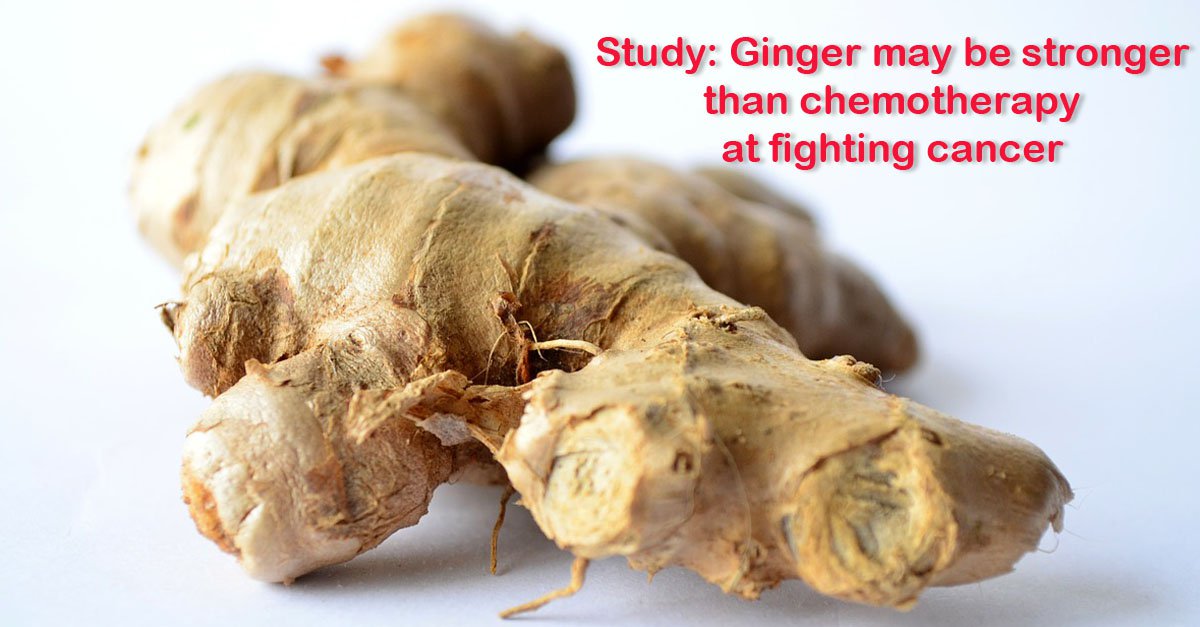
A new study reveals ginger contains a pungent compound that could be up to 10,000 times more effective than conventional chemotherapy in targeting the cancer stem cells at the root of cancer malignancy.
A new study published in PLoS reveals a pungent component within ginger known as 6-shogaol is superior to conventional chemotherapy in targeting the root cause of breast cancer malignancy: namely, the breast cancer stem cells.
As we have discussed in greater detail in a previous article titled, “Cancer Stem Cells: The Key To Curing Cancer,” cancer stem cells are at the root of a wide range of cancers, not just breast cancer, and are sometimes referred to as “mother cells” because they are responsible for producing all the different “daughter” cell types that makeup the tumor colony. While cancer stem cells only constitute between .2 and 1% of the cells within any given tumor, they have the seeming “immortal” ability to self renew, are capable of continuous differentiation, are resistant to conventional chemotherapeutic agents, and are tumorigenic, i.e. are capable of “splitting off” to create new tumor colonies. Clearly, the cancer stem cells within a tumor must be destroyed if cancer treatment is to affect a lasting cure.
The new study titled, “6-Shogaol Inhibits Breast Cancer Cells and Stem Cell-Like Spheroids by Modulation of Notch Signaling Pathway and Induction of Autophagic Cell Death,” identified powerful anti-cancer stem cell activity in 6-shogaol, a pungent constituent of ginger produced when the root is either dried or cooked. The study also found that the cancer-destroying effects occurred at concentrations that were non-toxic to non-cancerous cells – a crucial difference from conventional cancer treatments that do not exhibit this kind of selective cytotoxicity and therefore can do great harm to the patient.
The authors of the study further affirm these points:
“Cancer stem cells pose serious obstacle to cancer therapy as they can be responsible for poor prognosis and tumour relapse. To add into the misery, very few chemotherapeutic compounds show promise to kill these cells. Several researchers have shown that cancer stem cells are resistant to paclitaxel, doxorubicin, 5-fluorouracil, and platinum drugs [8, 16]. CSCs are thus an almost unreachable population in tumours for chemotherapy. Therefore any compound, that shows promise towards cancer stem cells, is a highly desirable step towards cancer treatment and should be followed up for further development.”
The researchers identified a variety of ways by which 6-shagoal targets breast cancer:
  • It reduces the expression of CD44/CD24 cancer stem cell surface markers in breast cancer spheroids (3-dimensional cultures of cells modeling stem cell like cancer)
  • It significantly affects the cell cycle, resulting in increased cancer cell death
  • It induces programmed cell death primarily through the induction of autophagy, with apoptosis a secondary inducer
  • It inhibits breast cancer spheroid formation by altering Notch signaling pathway through γ-secretase inhibition.
  • It exhibits cytotoxicity (cell killing properties) against monolayer (1-dimensional cancer model) and spheroid cells (3-dimensional cancer model)
It was in evaluating the last mode of 6-shagoal’s chemotherapeutic activity and comparing it to the activity of the conventional chemotherapeutic agent taxol that the researchers discovered an astounding difference. Whereas taxol exhibited clear cytotoxicity in the one-dimensional (flat) monolayer experimental model, it had virtually no effect on the spheroid model, which is a more “real world” model reflecting the 3-dimensionality of tumors and their stem cell subpopulations. Amazingly, this held true even when the concentration of taxol was increased by four orders of magnitude:
“In contrast [to 6-shagoal], taxol, even though was highly active in monolayer cells, did not show activity against the spheroids even at 10000 fold higher concentration compared to 6-shogoal.”
This is a highly significant finding, as it affirms a common theme in cancer research that acknowledges the primarily role of cancer stem cells: namely, while conventional techniques like surgery, radiation, and chemotherapy are effective at reducing a tumor’s size, sometimes to the point where it is “debulked,” burned,” or “poisoned” out of the body even below the threshold of re-detection, the appearance of “winning the battle” often comes at a steep price, as ultimately the cancer stem cell population regrows the tumors, now with increased vengeance and metastastic invasiveness, resulting in the cancer “winning the war.”
The monolayer model, which does not account for the complex immunity of actual cancer stem-cell based tumors against chemoagents like taxol, represents the old preclinical model of testing cancer treatments. The spheroid model, on the other hand, clearly shows that even 10,000 times higher concentrations of taxol are not capable of beating this ginger component at selectively targeting the root cause of the tumor malignancy.
In their concluding remarks, the authors point out a hugely important distinction between natural anti-cancer agents and conventional ones that have only been introduced in the past half century or so, namely, “Dietary compounds are welcome options for human diseases due to their time-tested acceptability by human bodies.”  
Unlike modern synthetically produced and patented chemicals, ginger, curcumin, green tea, and hundreds of other compounds naturally found in the human diet, have been “time-tested” as acceptable to the human body in the largest and longest running “clinical trials” known: the tens of thousands of years of direct human experience, spanning thousands of different cultures from around the world, that constitute human prehistory. These experientially-based “trials” are validated not by RCTs, or a peer-reviewed publication process, but by the fact that we all made it through this incalculably vast span of time to be alive here today. Consider also that if our ancestors made the wrong dietary choice by simply mistaking an edible berry for a poisonous one, the consequences could be deadly. This places even greater emphasis on how the “time testing” of dietary compounds was not an academic but a life-death affair, and by implication, how the information contained within various cultural traditions as “recipes” passed down from generation to generation are “epigenetic inheritance systems” no less important to our health and optimal gene expression as the DNA in our own bodies.
Ultimately, this new study adds to a growing body of research indicating that cancer stem cell targeting approaches using natural substances present in the human diet for thousands of years are far superior chemotherapy and radiation, both of which actually increase the relative populations of cancer stem cells versus non-tumorigenic ones. For further reading on ginger’s anti-cancer properties, consult our Ginger Research database. Also, you can use our Cancer Research Health Guide for thousands of studies and articles about natural healing approaches for cancer.
Sayer Ji is an author and educator, a Board of Governor for the National Health Federation, Steering Committee Member of the Global GMO Free Coalition (GGFC), and founder of Greenmedinfo.com. Join their free newsletter here.Sayer Ji

18 Natural Aromatase Inhibitors


18 Natural Aromatase Inhibitors

The number one topic in breast cancer communities, and the thing I get asked about most often, is definitely about natural aromatase inhibitors.  People are suffering from the effects of hormone inhibiting drugs – the list of side effects these drugs are capable of producing is seemingly endless. As a breast cancer coach, I hear all about them and have a great deal of sympathy for those taking these drugs.
It’s a subject near and dear to our hearts and we can spend plenty of time trying to dig up research on new natural alternatives – I know I do because I chose not to take Tamoxifen, much to my oncologist’s annoyance.  I just wasn’t willing to risk the side effects, such as cardiotoxicity and blood clots, etc. 
Update: I recently wrote an article sharing why I chose not to take Tamoxifen, in case you’re interested: Why I Chose Against Hormone Blocking Drugs
It worries me that the side effects of these drugs can be so debilitating and disruptive to quality of life.  More than that, I know quite a few who were on AIs for the requisite period of time (usually 5 years) and suffered recurrences anyway.  That indicates to me these drugs aren’t working as well as they are meant to.
A Good Article
While doing some research recently, I came across a lengthy article, on the NIH website,  “Natural Products as Aromatase Inhibitors” [1]. Be warned, that article will do your head in, unless you are a doctor, researcher or medical professional! 
I will attempt to boil it all down into layman’s language for you – you can read for yourself all of the reasons why AIs are prescribed, how they work in breast cancer, and how scientists are actively researching many natural products to discover which ones can be utilized to help breast cancer patients.  I know what you are really after — the list of natural things that exhibit AI activity. 
18 Natural Aromatase Inhibitors
  1. Dioon Spinulosum – or gum palm, a cycad which grows in Veracruz and Oaxaca, Mexico
  2. Encephalartos ferox – also a cycad which grows mainly in Africa
  3. Riedelia – a genus of plants in the Zingiberaceae family, comprises approximately 75 species that are distributed among New Guinea and the Maluku and Solomon Islands
  4. Viscum album – a species of mistletoe, also known as European Mistletoe or Common Mistletoe to distinguish it from other related species. It is native to Europe and western and southern Asia
  5. Cycas rumphii – also a cycad, commonly known as queen sago or the queen sago palm, it grows in the Moluccan island group (New Guinea, Java, Indonesia)
  6. Cycas revoluta – also a cycad, native to southern Japan
  7. Alpinia purpurata – also known as Red Ginger, a native to Malaysia
  8. Coccothrinax Sarg – Coccothrinax is a genus of palms in the Arecaceae family, there are more than 50 species described in the genus, plus many synonyms and sub-species, and they grow in a variety of places
  9. Five red wine varieties, the most active being Cabernet Sauvignon from Tanglewood (France), the other mentioned was Pinot noir from Hacienda (Sonoma, CA)
  10. Brassaiopsis glomerulata – a deciduous tree found in North Vietnam
  11. Garcinia mangostana L. (Clusiaceae) – also known as mangosteen, has a long history of use as a medical plant, found mostly in Southeast Asia
  12. Euonymus alatus – also known as winged spindle, winged euonymus or burning bush, it’s a species of flowering plant in the family Celastraceae, native to central and northern China, Japan, and Korea
  13. Isodon excisus Kudo var. coreanus – a small herbaceous plant that grows in Western Asia (Japan, China, Korea)
  14. Scutellaria barbata – a plant used in traditional Chinese medicine, other names include ban zhi lian’, scullcap or skullcap, it grows in Korea and southern China
  15. Camellia sinensis – also known as green tea (easily obtainable every morning for breakfast!)
  16. Vitis L. sp – also known as grape seed extract, the report cited a study where a water extract of grape seed extract was utilized and it had AI activity
  17. Agaricus bisporus – also known as white button mushrooms
  18. Trifolium pratense L. – also known as red clover flowers.  There is a lot of misinformation out there about red clover, please read my article Red Clover Controversy – Safe For Breast Cancer Or Not?
Update: See two more discussed below – selenium and pomegranate.
The article also mentioned that coffee, cocoa, collards, stout beer, tomato leaves and even cigarette smoke (!) strongly inhibited aromatase using a microsomal assay.  I don’t know about you but I’m not eating tomato leaves or breathing in cigarette smoke intentionally!
Many of the above listed things are not currently being produced as natural supplements.  I would suggest you print out this list and take it to your naturopath to see which ones would be available and safe for you to use.  Some of the listed items will be easily available (like #9, #15, #16, #17 #18) and you could easily incorporate them into your diet. 
Something not listed is selenium, we do have research indicating that it acts as a natural aromatase inhibitor, see my article  Why Iodine and Selenium Are Useful For Breast Cancer.
2017 Update – I found an older study from 2010 [2] indicating that the ellagitannins (phytochemicals) in pomegranates also had anti-aromatase activity. So make that 20 natural aromatase inhibitors (including selenium, above).
The above list is not exhaustive – the report did also discuss 125 flavonoids, 36 terpenoids, 19 peptides, 18 lignans, 16 xanthones, 15 fatty acids, 10 alkaloids, and 43 miscellaneous compounds having been evaluated but there was not sufficient information for me to feel it was worth listing them all.
Unfortunately, there is no information on dosages for any of the above nutrients, more information is clearly needed.
Just Remember Estrogen Is Not The Only Factor Involved In Breast Cancer
The important thing I would like you to take away from all of this is that we can drive ourselves crazy looking for the tiniest things that will give us an edge over this disease.  I hope you don’t get bogged down in this. Please remember, estrogen is not the only factor involved in breast cancer.  An overall anti-cancer strategy is to eat a healthy diet full of  fresh organic fruits and vegetables and super foods,  take the supplements that have research backing them (see my page discussing that topic), limit your exposure to toxic skin care products, get plenty of exercise DAILY and keep your stress levels down through the use of meditation or prayer. 
You may want to read some of my other articles about aromatase inhibitors:
References:
[1] Natural Products as Aromatase Inhibitors — https://www.ncbi.nlm.nih.gov/pmc/articles/PMC3074486/
[2] Pomegranate ellagitannin-derived compounds exhibit antiproliferative and antiaromatase activity in breast cancer cells in vitro – https://www.ncbi.nlm.nih.gov/pubmed/20051378
GET MY BEST TIPS on healthy ways to beat breast cancer and prevent recurrences by signing up for my free e-newsletters and e-books on the right.  You can also “like” me on Facebook (Marnie Clark, Breast Health Coach) to get my inspirational snippets, news and updates.  I promise to do my utmost to keep you informed and empowered on your healing journey… and beyond.  
If you enjoyed this post, please consider leaving a comment or subscribing to the RSSfeed to have future articles delivered to your feed reader.