Showing posts with label natural. Show all posts

Dr Josh Axe


7 Benefits of Feta Cheese Nutrition — the Healthiest Cheese & Even Anti-Cancer
Feta cheese nutrition - Dr. Axe
I have good news! Not all cheese is bad for you — so if you’re a cheese lover, make sure you choose the healthiest cheese out there: feta.
Cheese is a delicious, savory addition to many dishes, but with the rise in popularity of processed dairy, it’s become a product many people avoid when sticking to a healthy diet.
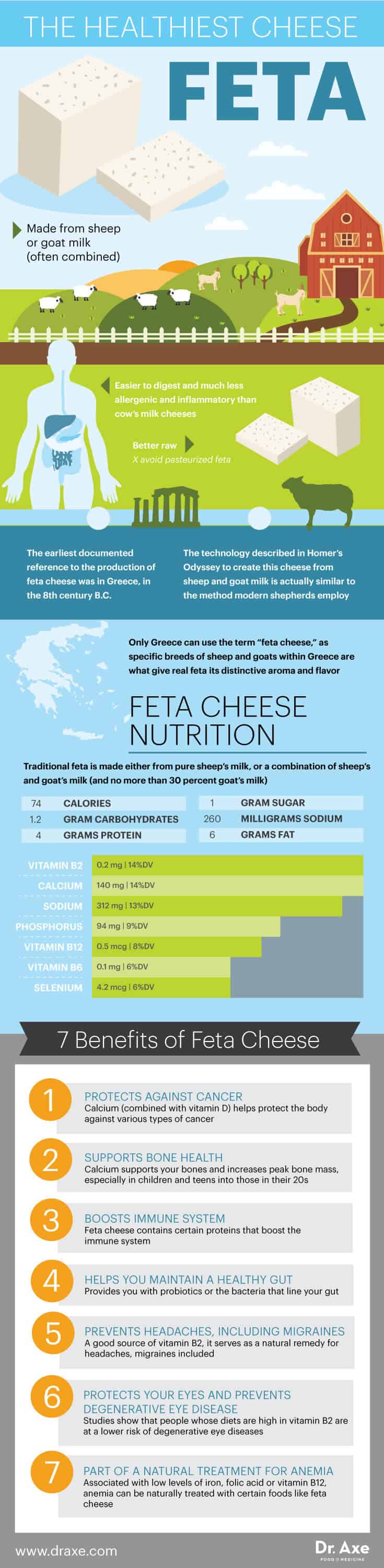
Made from sheep or goat milk (often combined), feta cheese is a nutrient-rich option for getting the flavor you’re looking for, without the guilt. Feta is easier to digest and much less allergenic and inflammatory than cheeses from cow’s milk, which is encouraging to those of you who may be sensitive to dairy products.

Like most food products, it’s much better raw. If you can, avoid feta cheese made from pasteurized milk products. It’s important to also remember that feta cheese, high in sodium and saturated fat, should be used sparingly, and not every day.

Feta Cheese Nutrition Facts

The word “feta,” used by Greeks to describe this extremely popular cheese, comes from the Italian word fetta, which means “slice.” While the European Union now has specific qualifications of feta cheese, it’s possible to find “feta” cheese in other parts of the world that is made from cow or buffalo milk.
Need a reason to eat more (healthy!) cheese. Click here for a free guide on the 7 benefits of feta cheese!

Feta is a soft brined cheese characterized by few to no holes, a tangy taste and no skin. Feta cheese nutrition will depend on exactly what brand and type of feta you get. Traditional feta is made either from pure sheep’s milk, or a combination of sheep’s and goat’s milk (and no more than 30 percent goat’s milk).
One serving of feta cheese (weighing about 28 grams) contains: (1)
  • 74 calories
  • 6 grams of fat
  • 260 milligrams sodium 
  • 1.2 grams carbohydrates
  • 4 grams protein
  • 1 gram sugar
  • 0.2 milligrams riboflavin/vitamin B2 (14 percent DV)
  • 140 milligrams calcium (14 percent DV)
  • 312 milligrams sodium (13 percent DV)
  • 94 milligrams phosphorus (9 percent DV)
  • 0.5 micrograms vitamin B12 (8 percent DV)
  • 0.1 milligrams vitamin B6 (6 percent DV)
  • 4.2 micrograms selenium (6 percent DV)

7 Benefits of Feta Cheese

1. Protects against cancer
Perhaps one of the most intriguing benefits of feta cheese nutrition? It’s cancer-protective effects. As a rich source of calcium, feta cheese allows you to take advantage of research suggesting that calcium (combined with vitamin D) helps protect the body against various types of cancer. (2)
Don’t forget that magnesium is vital for calcium absorption. If you have a magnesium deficiency, your body is not properly absorbing the calcium you consume, which means you won’t get its full health benefits.
But it’s not just calcium in feta cheese nutrition that protects against cancer! The protein alpha-lactalbumin can be found in this Greek cheese as well, and when it binds to calcium and zinc ions, has been suggested to have antibacterial and antitumor properties.
2. Supports bone health
You probably already know that calcium is good for your bones. After all, who hasn’t heard of the “Got Milk” campaign of the ’90s? However, countries with high dairy consumption also have high incidence rates of osteoporosis — so what’s going on, and why might feta be one of the answers to the calcium and dairy question?
First of all, it’s true — calcium supports your bones. It increases peak bone mass, especially in children and teens into those in their 20s. The greater your peak bone mass, the less risk you are at for osteoporosis and other conditions involving the loss of bone mass.
However, milk can hurt your bones, as pasteurized cow’s milk is one of the worst places to get the most calcium, due to its habit of causing acidosis (a high level of acid in the body). Instead, find other high-calcium foods (like feta), and try introducing more alkaline foods into your diet, such as parsley, spinach, and zucchini.
3. Boosts immune system
Another protein found in feta cheese nutrition is called histidine. This protein was initially considered important only in infant health, but later was found essential in adults as well. (3)
When histidine is combined with vitamin B6 (also found in feta cheese), it undergoes a molecular process to become histamine. That compound is part of the inflammatory process. Although it is generally important to remove foods that cause inflammation from your diet, a small degree of inflammation is what allows your immune system to fight disease.
Eating foods like feta cheese sparingly, combined with a diet high in antioxidants to protect from the damage of excess inflammation, can ensure a healthy immune system ready to fight disease the way it was originally designed. (Plus, as a bonus, feta cheese contains probiotics, which also help your immune system fight infection and disease!)
Feta cheese guide - Dr. Axe

4. Helps you maintain a healthy gut
Another good thing about feta cheese nutrition is that is provides you with helpful probiotics! (4) Probiotics are the bacteria that line your gut. When they go out of whack, your body becomes a breeding ground for bacteria, yeast, fungi, parasites and many other very unsavory things.
Not only are probiotics immunity boosters, they allow you to maintain a healthy gut and avoid many digestive problems common in high-stress lifestyles, especially in people who regularly consume GMOs, sugary foods and are exposed to antibiotics and other dangerous chemicals.
5. Prevents headaches, including migraines
Feta cheese is a good source of vitamin B2 or “Riboflavin.” Vitamin B2 has been known for a long time as a natural remedy for headaches, migraines included. (5) A diet rich in vitamin B2 (and Riboflavin supplements, if needed) can serve as a preventative method to limit migraines and other types of chronic headache.
6. Protects your eyes and prevents degenerative eye disease
Riboflavin is good for more than one part of your noggin! Studies show that people whose diets are high in vitamin B2 are at a lower risk of degenerative eye diseases such as cataracts, keratoconus and glaucoma (all of which are associated with aging). (6)
7. Part of a natural treatment for anemia
Anemia is related to a problem with the hemoglobin cell that carries oxygen throughout the body. When your body is unable to get enough oxygen to the cells and tissues, it becomes weak and fatigued.
Associated with low levels of iron, folic acid or vitamin B12, anemia can be naturally treated with certain foods and supplementation of the deficient nutrients. Therefore, the vitamin B12 (and small amount of iron) found in feta cheese can serve as part of a diet to fight anemia. (7)

The History and Battles of Feta Cheese

The earliest documented reference to the production of feta cheese was in Greece, in the 8th century B.C. The technology described in Homer’s Odysseyto create this cheese from sheep and goat milk is actually similar to the method modern shepherds employ. Popular in ancient Greece, feta cheese was vital to Greek gastronomy.
However, what we consider feta cheese today was first recorded in the Byzantine Empire under the name “prósphatos,” meaning “fresh.” It’s brine storage and marketing was later explained by an Italian visitor to the island of Crete.
Feta cheese, interestingly, has been a source of quite a bit of legal battling in recent decades. Within the European Union, Denmark had, at one point, created what they termed “feta cheese,” but made from blanched cow’s milk. Since 2002, marking the resolution of that case, the EU has deemed the term “feta” as a PPO, or “protected product of origin,” of Greece.
Another recent agreement in 2013 between the EU and Canada protects the name “feta cheese” from being used, except when referring to sheep’s/goat’s milk cheese imported from Greece. Canadian manufacturers are now required to label their similar product as “feta-style cheese.”
These disputes originated mainly from the argument that the specific breeds of sheep and goats within Greece are what give real feta its distinctive aroma and flavor.

How to Use + Recipes

Feta is generally used as a topping for salads and other types of food. You can use feta cheese raw or cooked. Many recipes call for feta cheese crumbles, but you’ll also find many recipes that use slices of feta.
One of our best recipes involving feta is my Roasted Beet Salad. It’s a simple salad with antioxidant-rich beets, using feta cheese as a topping.
You may also enjoy feta in many Mediterranean Diet Recipes, including Cucumber Rollups. Just put some raw feta crumbles on sliced cucumber covered in hummus, along with red peppers.
Hungry for grilled cheese? Then I suggest using feta as part of this Avocado Grilled Cheese sandwich. Trust me, you will be really happy you did.

Potential Side Effects & Caution

While feta cheese is significantly less allergenic than cheese derived from cow’s milk, it is still possible to be allergic to goat or sheep’s milk. About 90 percent of people with a diagnosed cow’s milk allergy also find that their body recognizes the same proteins in goat’s milk.
However, if you are sensitive but not allergic to cow’s milk, you will probably find products like feta to be a great alternative!
Another potential caution when consuming feta cheese is for those suffering from histamine intolerance. (8) Again, histamine is a vital protein in small doses to help your body fight infection, but too much of it causes excess inflammation. People who suffer from histamine intolerance, unlike most people, have a very hard time breaking down histamine when it exists in high levels in the body, and may experience allergy-like symptoms when consuming food containing the histamine protein.
If you experience symptoms like hives, sweating or swelling after consuming feta cheese or other goat/sheep milk products, stop eating it and consult your physician immediately.
The Truth About Cancer


12 Ways to Use Essential Oils For Healing & Health

In a hurry? Click here to read the Article Summary...

One of the things new users of essential oils ask most frequently is “What do I do with them? I just bought three new bottles and I have no idea how to use essential oils, other than take the caps off and sniff them.” If you fall into this category, this article will offer some great tips on how to use essential oils as part of your healing practice and general health improvement.

Phytochemicals: the Healing Compound in Essential Oils

It is interesting to learn that the very thing that gives an essential oil its characteristic smell is also what provides that oil with its healing ability. There can be hundreds of phytochemicals (plant based chemicals) within each drop of essential oil. Science is just beginning to learn exactly how each phytochemical works in the human body. Having said that, there is still much we do not know!
These phytochemicals have funny names like terpenes, aldehydes, esters, ketones, phenols, oxides, sesquiterpenes, and many more. Each one works differently in the body.
For instance, ketones (found in lavender essential oil, patchouli, hyssop) stimulate cell regeneration, liquefy mucous, and have calming properties.
Aldehydes (found in lemongrass essential oil, melissa, and citronella) tend to be highly anti-viral and anti-inflammatory.
Sesquiterpenes (found in cedarwood, sandalwood, and German chamomile, to name a few) are known for reversing inflammation. Sesquiterpenes are also one of the only substances that can cross the protective blood-brain barrier and increase oxygen to the brain. They can also reverse DNA damage and delete it from cellular memory. As a result, essential oils that contain sesquiterpenes could be quite beneficial for cancer patients.

Essential Oil Quality Varies

The phytochemical make-up of an oil can vary from plant to plant, even on the same farm. Growing conditions, harvesting methods, and even the time of day that the plant is harvested can have an effect on the phytochemical content of an oil. For instance, ylang ylang flowers are best collected between midnight and 9:00 am in the morning. That is when the essential oil content in the flowers is at its highest and best.
So why am I sharing all of this with you? Not only because it’s interesting, but also to underscore the need to ensure that your essential oils, particularly if you are using them for regaining your health, come from a reputable company.
Make sure the essential oils you purchase are organically grown. Be sure that the company knows how to properly distill each of the oils they sell, and that they do not use chemicals during the extraction process. A good essential oil company will also check each essential oil batch using gas chromatography to ensure that each batch has the proper phytochemical constituents. Don’t just rely on a label that says “pure.” These days, that just isn’t good enough.
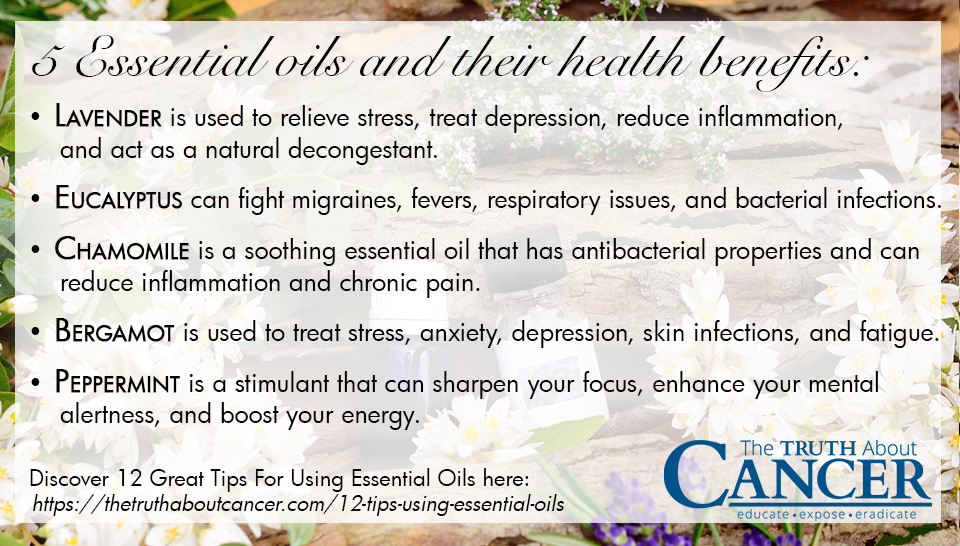
Essential-Oils-health-benefits

12 Great Ways to Use Essential Oils

#1. Bottle Inhalation Method – Begin by holding the essential oil bottle about the level of your heart. Waft the bottle a little, moving it ever closer to your nose. Deeply breathe in the aroma, gently at first. If you like it and it seems appropriate, breathe more deeply. When you breathe in an essential oil through the nose, the tiny oil molecules (the vapor) contain all of the same properties that the oil contains. They interact with the olfactory organ and the brain. Oil molecules inhaled through nose or mouth also move into the lungs and interact with the lungs and respiratory system.
#2. Hand Inhalation Method – Drip a few drops of essential oil onto your palms, rub them together to activate the oil, and cup them over the mouth and nose. As with the Bottle Inhalation Method, breathe gently at first and then if it seems appropriate, breathe the oil in deeply − as if you were dragging the oil up over your brain. Be sure to leave your eyes out of this as essential oils do not belong anywhere near the eyes. (Warning: If you do happen to accidentally get an essential oil into your eyes, dilute immediately with a carrier oil like sweet almond or olive, never water. It will burn like crazy but will ease in a few minutes.)
#3. Terracotta Pendant Method – Put a drop of oil on a terracotta pendant, fasten it around your neck, and enjoy the benefits of that oil as you move through your day.
#4. Bedtime Salt Bowl Method – Place a small amount (about 1/4 cup) of sea salt flakes or Epsom salt in a small bowl. Drip 10-15 drops of your chosen essential oil onto the salt. Keep it by your bed. The salt helps to slow down the evaporation rate of the oils, allowing you a longer diffusion throughout the night. A great way to get some anti-cancer potential into you while you sleep.
#5. Steam Bowl Inhalation – Drip your chosen essential oil into a bowl of steaming water (please use filtered so that no chlorine is also inhaled). Place a towel over your head and over the bowl of water and breathe in deeply (be careful if the water was boiled, the steam can be hot enough to burn). Please keep your eyes closed when using this method or use swimming goggles to protect your eyes. The steam quickly vaporizes the oil and it is rapidly absorbed into the throat, sinuses, and then bloodstream. This method is a very direct and potent method. Do not use any more than 1-2 drops of essential oil, or you may find it overwhelming. Please note that heating oils can diminish the therapeutic value of the oil so do not use this method exclusively if you are fighting cancer.
#6. Ultrasonic Diffusing – An ultrasonic diffuser uses air, water, and ultrasonic vibrations to diffuse the oil into the air. A fine mist is created and released into the air, so it doubles as a humidifier. The concentration of essential oils is gentler since water is used. This method allows the oil molecules to remain air-bound for several hours and does not affect the structure or therapeutic value of the oil. You can use several oils together, for instance frankincense and sandalwood. Two or more oils are better than one, because the phytochemicals in each oil offer different healing properties.
#7. Car Diffuser – Many companies now make car diffusers for their essential oils. Imagine getting a great smelling anti-cancer treatment right in the safety of your car as you drive to work or while running errands! Don’t have a diffuser? Don’t worry − just get a cotton ball, drip a few drops of your chosen oil onto it, stick it in the air vent, turn on the vent and enjoy.
#8. Essential Oil Massage – There are a couple of ways to go about this. You can massage the essential oils into your body, neat, meaning without dilution. Be sure to have some guidance from your practitioner about which ones may require dilution. You can also dilute essential oils by adding a natural carrier oil (organic wherever possible) such as sweet almond or coconut oil, or even olive oil. Apply the diluted essential oils to skin areas with gentle massage strokes. As a guideline, you can make a 1% concentration, which equals one drop of essential oil to one teaspoon of carrier oil. A 2% dilution would be two drops of essential oil to one teaspoon of carrier oil. Be sure to consult a practitioner when using essential oils for children, as they require much weaker dilutions than do adults.
#9. The Foot Absorption Method – Massage a few drops of your chosen essential oils into the bottoms (the soles) of your feet before you go to bed. The soles of the feet contain some of the largest pores in the body. Therefore, the oils are easily absorbed and working in your bloodstream within just a few minutes.
#10. Oral Ingestion – Unless you are working under the guidance of a certified health practitioner, it is not suggested that you take an essential oil internally. It is not that taking oils internally is necessarily a bad or dangerous thing, but you do need some guidance as to which oils are safe to take internally, how much to use, and how frequently.
#11. Essential Oil Bath –  Drip your chosen essential oils into a warm (not hot) bath. Use a few tablespoons of a dispersant like full cream milk or coconut oil which will assist in the absorption of the oils through your skin. Then just step into the bath and soak. Not only are you absorbing the oils, but also directly inhaling them at the same time. This is also a great way to finish off those bottles of essential oils that just have a drop or two left in them − just drop the entire bottle into your bath.
#12. Instead of Perfume – Rather than using man-made (and potentially toxic) perfumes, combine your favorite essential oils and wear them on your pulse points, behind your ears, on your collarbone, and on both sides of your neck. Not only will you smell fabulous, you are bringing the phytochemicals in those oils right into your body.
As you can see, there are many ways to use essential oils. Don’t be afraid to try new methods. The important thing is to begin, and to use them every day… because they can’t help you improve your health if they stay in the bottle!

Article Summary

  • New users of essential oils often wonder what to do with them beyond taking off the caps and sniffing the oils.
  • There can be hundreds of phytochemicals (plant based chemicals) within each drop of essential oil. These phytochemicals have funny names like terpenes, aldehydes, esters, ketones, phenols, oxides, sesquiterpenes, and many more.
  • Each phytochemical has different properties and science is just beginning to understand how each phytochemical works in the human body.
  • The phytochemical make-up of an oil can vary from plant to plant. You need to ensure that your essential oils, particularly if you are using them for regaining your health, come from a reputable company. Don’t just rely on a label that says “pure.”
  • Here are 12 ways you can use essential oils (see the article for details on how to use each method):
    1. Bottle Inhalation Method
    2. Hand Inhalation Method
    3. Terracotta Pendant Method
    4. Bedtime Salt Bowl Method
    5. Steam Bowl Inhalation
    6. Ultrasonic Diffusing
    7. Car Diffuser
    8. Essential Oil Massage
    9. The Foot Absorption Method
    10. Oral Ingestion
    11. Essential Oil Bath
    12. Instead of Perfume


Natural Alternatives to Hormone Therapy for Breast Cancer


In Alternative Cancer Therapies, Alternatives to Hormone Therapy for Breast Cancer, Alternatives to Tamoxifen, Anticancer foods, foods for colon cancer, foods for breast cancer, Breast Cancer, foods that target cancer stem cells, Healing Cancer Naturally, Hormone Balance, Natural Alternatives to Aromatase Inhibitors, Tamoxifen on April 14, 2017 at 9:29 am


Many women choose to skip hormone therapy for breast cancer in favor of natural alternatives. This is because many don’t believe that tamoxifen, for example, is actually the wonder drug it is claimed to be. Others are terrified about the harm that this drug (and others) can do, and do not feel the purported benefits justify the risks. Importantly, many women have come to realize that the statistics provided just don’t add up.


Tamoxifen vs. Nature, the Choice is Yours

The reality of the small absolute percentages is something to keep in mind when your oncologist is spewing statistics. It’s frightening enough to be told you have breast cancer without having statistics thrown at us that are taken out of context. A statistic that is often quoted to women advised to take tamoxifen is that it will cut their recurrence risk in half. In reality, that half may only represent a single digit decrease. For some excellent articles on this please see the resource section below. It is also important to know that many women who take tamoxifen have recurrences anyway, and also that there are indeed significant risks to taking this drug.


Progesterone and the Hormonal Dance


When estrogen is too high and progesterone is too low, we have a condition known as estrogen dominance. When estrogen dominates, we have an increased risk of breast cancer. However, we need estrogen, so the goal should not be to block it (with aromatase inhibitors), but rather to reduce it (if necessary) while increasing progesterone. Importantly, very few doctors actually test hormone levels before ordering tamoxifen or aromatase inhibitors.


Unfortunately, most women are deficient in progesterone. Stress is the number one reason for reduced progesterone. When we are stressed, adrenaline and cortisol rise and progesterone levels fall. This is because under stress, the body will always utilize the available pregnenolone to produce cortisol instead of progesterone. One of the other main reasons for progesterone deficiency is the blocking of ovulation, which is done with oral contraceptives. Oral birth control pills suppress a woman’s own production of progesterone, which could result in a lifetime of progesterone deficiency. This topic will be explained further in my next post.


Making Progesterone…


The body uses cholesterol to make progesterone. In short, cholesterol makes the hormone pregnenolone, which is then converted into progesterone. (Pregnenolone is also the precursor for other hormones such as estrogen, cortisol, and testosterone). However, the body only makes so much pregnenolone, and the other hormones compete for this.


Many natural substances will help reduce estrogen dominance by managing estrogen and boosting progesterone levels. While no foods contain progesterone, certain micro-nutrients in them can help boost levels. For a more complete list, see below, but consider foods rich in zinc, magnesium, vitamin C, B6, and sulfur.


Sulfur-rich cruciferous vegetables (broccoli, kale, cauliflower, etc.) are rich in glucosinolates, which activate phase 2 detoxifications in the liver. This helps to remove estrogen from the body and prevents it from circulating too long, keeping estrogen levels high. The sulfur helps boost progesterone levels. For more information on the anti-cancer power of crucifers, please Click Here.


For information on reducing estrogen levels, please refer to your Estrogen and Detoxification Handouts. If you are not currently a client of mine, you can request these tools via my Contact Page (there is a $25 charge for this).


Many women are under the impression that progesterone supports the growth of breast cancer. However, while synthetic progesterone does, in its natural form it is highly protective. For an in-depth discussion on this, please Click Here.


Recap of Natural Alternatives:


There are many things involved with ‘natural alternatives’. But again, one of the most important things with regards to estrogen is to raise progesterone (after all, we need estrogen for bone and heart health and over a hundred other necessary functions). Below are some suggestions. Many of these things have already been recommended to you. For more detail, please refer to your Estrogen and Detoxification Handouts as well as your overall protocol.


  • Try to include some of these items daily as well as throughout the day: (For supplement brand recommendations, please go to my Shop Page. You should be able to find most items locally, but if not, there are links to Amazon.
  • Cruciferous vegetables and DIM—be sure you have adequate iodine in your diet as DIM and crucifers inhibit the uptake of iodine by the thyroid gland. For more detail on the importance of iodine, please refer to your Estrogen Handout
  • Consume apples, onions, garlic, green tea, and other quercetin rich foods 
  • Eat berries and pomegranate 
  • Resveratrol –this is best gotten from red grapes and other foods, but fine to supplement if you prefer (do not take supplemental resveratrol with Salvestrols) 
  • Herbs (fresh, dried, or essential oils) such as sage, rosemary, ginger, curcumin, thyme, basil, and ashwaganda 
  • EFA’s from omega 3 fatty acids (please use caution with fish oil supplements as they can be toxic) 
  • Licorice root –licorice root can lower estrogen while at the same time raising progesterone 
  • Vitamin D 
  • Vitamin K2 
  • Vitamin E (mixed tocopherols or eat vitamin E-rich foods, such as nuts) 
  • Selenium 
  • Magnesium –reduces stress reactions and breaks down estrogen metabolites, reducing estrogen dominance 
  • Vitamin C 
  • Vitamin B6 (combats stress and helps the liver break down estrogen, reducing estrogen dominance) and helps increase blood levels of progesterone 
  • Zeolites (for a discussion on this, please see my Shop Page
  • Zinc 
  • L-Arginine 
  • Chinese Herbal Medicine 
  • Healthy cholesterol (needed to make pregnenolone) from coconut oil, olive oil, eggs, avocado, and olives 
  • Fiber-rich foods such as flax seed, quinoa, oats, and millet (see below for more on flax–just be sure to grind this fresh daily) 


You will also want to make sure that your liver and gut are functionally efficiently as estrogen is metabolized in the liver and excreted out of the bowel. By enhancing liver function, more estrogen is broken down in the body, reducing the overall estrogen load. Nutrients derived from cruciferous vegetables help with the detoxification of estrogen trough the liver (see more below).


When the liver and colon have become sluggish due to low thyroid function, stress, and an overburden of toxins, the body cannot break down and remove excess estrogen adequately from the system. The excess unbalanced estrogen gets stored in the fat cells of breast tissues when it is not properly eliminated. Supporting the liver with detoxifying foods such as cruciferous vegetables (broccoli sprouts, cauliflower, and Brussels sprouts), onions, whey powder, and supplements such as N-acetylcysteine (NAC), Milk Thistle, and SAMe can be very helpful.


Lifestyle Choices for Balancing Hormones and Inhibiting Cancer


Hormones become out of balance when we subject our bodies to a lifestyle that includes refined and processed foods, inadequate exercise, poor quality sleep, and exposure to xenoestrogens. It is important to remember that contrary to what you may have been told, breast cancer (and other hormonal cancers) are not just about estrogen. Below are some suggestions to support hormone homeostasis as well as inhibit the development or progression of cancer.
  • Consume phytoestrogens -phytoestrogens act more like estrogen blockers than like estrogen; they modulate the production, availability, and action of hormones and slow down cell division. In fact, phytoestrogens are not really estrogens; they are anti-estrogens that reduce estrogen activity in the body. Plant estrogens protect us from the stronger estrogens our bodies produce as well as the xenoestrogens (chemical estrogen) found in environmental chemicals, such as BPA and chemicals in personal care products. Phytoestrogens actually contain compounds that have been shown to reduce the growth and spread of cancer cells. Soy and flax are excellent sources of phytoestrogens. 
  • Soy blocks cancer-promoting estrogens from attaching to the estrogen receptors on breast cells. It has also been shown to stop tumor growth, prevent metastasis, and shut off new blood vessels in growing tumors. Fermented soy, such as tempeh and miso are preferred over unfermented versions such as tofu as the fermentation process increases free radical scavenging activity and removes the nutrient blocking effect that soy can have—the phytic acid in unfermented soy can block absorption of key minerals such as magnesium and zinc. Soy in a highly-processed form (like soy protein isolate, soy protein concentrate, soy cheese) should be avoided. Due to the fact that most soy is genetically altered, it is highly recommended to consume only organic. (I do take issue with tempeh as it is commonly ‘shrink-wrapped’ in plastic.) 
  • Flaxseed modulates the production, availability, and action of hormones—and does so much more. The lignans in flax lower the production of estrogen by blocking the aromatase enzyme (similar to aromatase inhibitors) and block the estrogen receptors (similar to Tamoxifen). When lignans are consumed, intestinal bacteria convert them into enterolactone and enterodiol, weak estrogens. They attach to estrogen receptors, stimulate them weakly and block estrogen binding. This prevents estradiol or estrone from attaching to the estrogen receptors and strongly stimulating them, and includes not just the estrogen we produce, but also environmental toxins, thus making breast tissue more resistant to these environmental toxins. One long-term study reported that relatively high circulating enterolactone levels are associated with lower risk of death after an early-stage breast cancer diagnosis. A 2003 study conducted by Lilian Thompson PhD showed that daily consumption of ground flax seed significantly reduced breast cancer tumor size. Please read my articles — Flaxseed: Better Than Tamoxifen and Demystifying Flaxseed and Estrogen.
  • Eat good food—a diet rich in whole, primarily plant-based foods will support the adrenals and pretty much every function of the body. 
  • Exercise—it reduces stress and positively effects gene expression; helps to balance hormones. 
  • Clean out the closets—replace health, home and beauty products with non-toxic alternatives. A quick visit to the Environmental Working Group website will enable you to evaluate the products you use. 
  • REDUCE STRESS—stress challenges adrenal function and makes direct physiological changes to DNA, not to mention that it significantly raises estrogen levels and depletes progesterone. Engage in yoga, meditation, and other mind-body therapies such as Psychotherapy, EFT, EMDR, the Emotion Code, and others that release negative emotions and past traumas. 
  • Drink clean liquids. Choose filtered water (remove chlorine, fluoride, and other toxins in tap water). 
  • Avoid alcohol, but if you do drink wine, make it organic–you wouldn’t eat conventional grapes, so don’t drink conventional wine. And, while red wine is somewhat protective against breast cancer as its resveratrol and other anti-cancer compounds help to metabolize estrogen and activate the P53 gene, don’t go overboard. Your liver has to process that alcohol and if you drink too much, it won’t be able to metabolize estrogen efficiently. For more on the pros and cons of alcohol, please Click Here
  • Get more sleep—lack of sleep disturbs hormone balance. Try to get to sleep by 10 pm as melatonin production peaks between 10 pm and 2 am. Melatonin stimulates tumor-suppressor genes and counteracts the effects of aggressive estrogens, including xenoestrogens. Cell phone EMF exposure can suppress the production of melatonin—limit use before bed (unplug 1-2 hours before going to bed) and do not keep them near your bed, and preferably out of your room. 
  • Go with your gut, take a probiotic. Probiotics support gut bacteria and improve digestion, helping to prevent constipation. This is important because when stool remains in the bowel for extended periods of time, excess estrogen is re-absorbed and re-circulated into the bloodstream. Plus, immune function depends on healthy gut micro flora—and gut flora effects cancer genes too! 
  • Consume GLA (gamma-linoleic acid), which is found in evening primrose oil and in hemp seeds. Research shows that this type of omega-6 may support healthy progesterone levels. 
  • Eat turmeric or take supplements as turmeric effects estrogen receptor positive cancer cells. 
  • Eat zinc-rich foods such as pastured eggs and meats and sprouted seeds. Shellfish such as oysters are abundant in zinc but should be eaten only in moderation. 
  • Eat onions, garlic, chives, and scallions which are rich in sulfur-containing amino acids and the powerful anti-oxidant quercetin that help the liver detoxify at a higher level and reduce the production of estrogen. 
  • Eat more vegetables. Aim for 10-15 servings a day (at least one pound daily). This will help excrete estrogen so it doesn’t keep circulating in the body. Also, aim for 35-45 grams of fiber per day, achieving this goal slowly to avoid gas or bloating. This will also help to keep weight in check—overweight or obese people tend to have higher circulating estrogen. Combining various vegetables in one meal can be especially helpful. For information on food synergy, please Click Here
  • Eat raw carrots– When carrots are well chewed or grated, they help to stimulate the intestines and reduce the re-absorption of estrogen and the absorption of bacterial toxins. The fiber in raw carrots binds to excess estrogen, helping to safely remove it from the body. 
  • Essential oils can also be quite helpful in the management of estrogen-receptor positive breast cancer. Essential oils prevent angiogenesis, stop metastatic growth, increase apoptosis, and do so much more. Once you get started with essential oils, you will find that most, if not all, contain powerful anti-cancer properties, including the balancing of hormones.
  • Clove oil –Research has revealed that the eugenol in clove not only inhibits cancer growth and promotes apoptosis (cancer cell death), but it also acts as an antagonist to estrogen. 
  • Lemon and other citrus oils can help reduce circulating estrogen. [On a side note, the D-Limonene in lemon oil has many other impressive anti-cancer abilities: it inhibits cellular proliferation and tumor growth, promotes apoptosis, supports immune function, and stimulates the liver’s detoxifying systems– and so much more]. 
  • Thyme oil supports progesterone levels. Evening primrose oil and thyme together are very beneficial to help balance levels of progesterone. (Please do not ingest thyme oil–better to get this from fresh thyme, which is delicious and safer.) 
  • Clary Sage oil helps balance estrogen levels whether you have too much or too little estrogen. You can use it with a carrier oil on your skin or hair. It also initiates apoptosis (programmed cell death). Clary sage also contains phytoestrogens which, like flaxseed, can block estrogen receptors. I suggest you rub a few drops into the soles of your feet before bed. This will help to balance your hormones as well as promote healthy sleep. 
  • Myrrh and fennel are strong phytoestrogens. Myrrh clears excess estrogen and detoxifies the liver. 
  • Sandalwood stops DNA from repairing itself (cancer DNA). Note: Cedarwood can be just as effective and is cheaper. 
  • Mint is effective against numerous types of cancer, such as acute T-cell leukemia, brain tumors, prostate, breast, cervical, bladder, colorectal and pancreatic cancers. 


Lastly, and I cannot stress this enough — breast cancer is NOT just about estrogen. Cancer is a symptom of a complex problem. It is a multi-factorial situation that presents to reveal dis-ease within the mind, body, and soul. Therefore, in order to heal, one must correct the issues that caused the symptom we know as cancer.


Please also read:


https://elynjacobs.com/2016/10/26/natural-alternatives-to-aromatase-inhibitors-2/


https://elynjacobs.com/2012/01/15/natural-alternatives-to-tamoxifen/


Resources: Understanding Statistics


http://cancercompassalternateroute.com/breast-health/tamoxifen-and-the-manipulation-of-statistics/


http://www.greenmedinfo.com/blog/tamoxifen-praised-life-saving-still-causing-cancer


https://thetruthaboutcancer.com/truth-about-tamoxifen-part-1/


Tamoxifen: What Difference Does It Really Make?


Elyn


~~If you don’t know your options, you don’t have any~~


Elyn Jacobs is a breast cancer survivor and holistic cancer strategist who helps people make better, healthier, non-toxic choices. She emphasizes the critical nature of addressing the root cause of cancer and not just its presenting symptoms (such as the tumor). Elyn specializes in understanding the role of estrogen in breast cancer and debunks the myths associated. She is a Contributing Editor for The Truth About Cancer and was creator and host of the Survive and Live Well Radio Show on the Cancer Support Network. Elyn is on the Medical Advisory Board for BeatCancer.Org and is on the Advisory Board to the Radical Remission Project. Elyn was the Executive Director of the Emerald Heart Cancer Foundation. Contact Elyn via her website, www.elynjacobs.com. Elyn offers consults via Skype, phone or in person.