Showing posts with label breast cancer cure. Show all posts

Cannabis and coconut oil make powerful mixture to kill cancer cells

Humans have cultivated and used the flowering tops of the female cannabis plant, known colloquially as marijuana since history was recorded. Archaeologists in Central Asia even found over 2 pounds of cannabis in a 2,700-year-old grave of a shaman.
Written and pictorial evidence of cannabis use is scattered throughout numerous cultures indicating a wide acceptance and use of the plant for thousands of years.

Drug Classification Halts Use

cannabis
Federal prohibitions outlawing the therapeutic and recreational use of cannabis were first imposed by Congress with the Marijuana Tax Act of 1937. Later, the plant’s organic compounds (cannabinoids) were classified as a Schedule I substance under the Controlled Substances Act of 1970.
This classification puts the plant in the same pool as heroin and states that cannabis possesses “a high potential for abuse … no currently accepted medical use … [and] a lack of accepted safety for the use of the drug … under medical supervision.”
In contrast, cocaine and methamphetamine – illegal for recreational use, may be consumed under a doctor’s supervision and are classified as Schedule II drugs. Examples of Schedule III and IV drugs include anabolic steroids and Valium. Analgesics that contain codeine are defined by law as Schedule V drugs, the most lenient classification.

In Support of Therapeutic Use

Advertisement
Federal lawmakers continue to use the dated drug classification as a means to defend criminalization of marijuana. However, there appears to be a very little scientific basis for the categorization of the plant. As its prohibition has passed 75 years, researchers continue to study the therapeutic properties of cannabis.
There are over 20,000 published reviews and studies in a scientific literature that pertain to the cannabis plant and its cannabinoids, almost one-third of these have been published in the last 4 years. A keyword search on PubMed Central (the US government library of peer-reviewed scientific research) shows 2,100 studies alone since 2011.
Modern culture is now catching up on what our ancestors knew, and public opinion and relaxing state legislation are leading the way for more people to use medicinal marijuana for a wide number of medical conditions. At present, marijuana for medical purposes is legal in 20 states and the District of Columbia.
While the debate continues to boil at both state and federal levels, there has been a strong and growing trend of acceptance related to the growing body of scientific evidence indicating that marijuana may indeed contain some powerful medicinal properties that we would be foolish to overlook.
Joycelyn Elders, MD, former US Surgeon General, wrote the following in a March 26, 2004, article titled “Myths About Medical Marijuana,” published in the Providence Journal:
“The evidence is overwhelming that marijuana can relieve certain types of pain, nausea, vomiting and other symptoms caused by such illnesses as multiple sclerosis, cancer, and AIDS — or by the harsh drugs sometimes used to treat them. And it can do so with remarkable safety. Indeed, marijuana is less toxic than many of the drugs that physicians prescribe every day.”
Ray Cavanaugh, Ph.D., National Director of the American Alliance for Medical Cannabis (AAMC), wrote the following in a 2002 article titled “The Plight of the Chronically Ill,” posted on the AAMC website:
“Many of the chronically ill have successfully sought relief with the use of medical cannabis, an age-old remedy that now shows real scientific efficacy. Hundreds of thousands of the sick have replaced disabling narcotics and other psychotropic medications with nontoxic and benign cannabis. The anecdotal evidence is overwhelming.
Folks with spinal injuries able to give up their walkers, AIDS patients able to gain weight and keep their medications down, cancer patients finding relief from the terrible nausea of chemotherapy, chronic pain patients once again functional with their consciousness restored from narcotic lethargy, and folks once disabled from crippling psychiatric disorders and addictions, returned to sanity and society with the assistance of a nontoxic herb with remarkable healing powers.”
The American Nurses Association (ANA) wrote the following in its Mar. 19, 2004 “Position Statement: Providing Patients Safe Access to Therapeutic Marijuana/Cannabis,” posted on the ANA website:
“The American Nurses Association (ANA) recognizes that patients should have safe access to therapeutic marijuana/cannabis. Cannabis or marijuana has been used medicinally for centuries. It has been shown to be effective in treating a wide range of symptoms and conditions.”
Researchers at the University of California Center for Medicinal Cannabis Research announced findings from a number of randomized, placebo-controlled clinical trials on the medical utility of inhaled cannabis in 2010.
Advertisement
The studies used the FDA ‘gold standard’ clinical trial design and reported that marijuana should be the “first line of treatment” for patients suffering from neuropathy and other serious illnesses.
Neuropathy is a type of pain associated with diabetes, cancer, spinal cord injuries, HIV/AIDS and other debilitating conditions. The trials indicated that marijuana controlled pain as good or better than available medications.
Scientists continue to study the effectiveness of cannabinoids all over the world. In Germany, there have been over 37 controlled studies, with over 2,500 subjects, assessing the safety and efficacy of marijuana, since 2005. In contrast, most FDA-approved drugs go through far fewer trials with fewer subjects but are approved for use.
The research on cannabis has shifted from studying its ability to alleviate symptoms of a disease such as nausea associated with chemotherapy to its potential role in modifying disease. Medical marijuana has been shown to slow the onset of Alzheimer’s disease and moderate autoimmune disorders including multiple sclerosis, inflammatory bowel disease, and rheumatoid arthritis.

Cannabis and Coconut Oil

Medical marijuana capsules infused in coconut oil are an alternative way to therapeutically use cannabis without having to inhale it through smoking. Infusing cannabis into coconut oil also allows for easy entry into the liver where it can be rapidly processed.
Coconut oil is used because of its high amount of essential fatty acids which makes it a good binding agent for the cannabinoids. Not to mention its amazing health properties. Half of the fat in coconut oil is comprised of a fat that is not frequently found in nature, lauric acid.
Advertisement
Lauric acid has been called a “miracle” ingredient due to its health-promoting capabilities and is present in a mother’s milk. In fact, it can be found in only three dietary sources—small amounts in butterfat and larger amounts in palm kernel and coconut oil.
In the body, lauric acid is converted to monolaurin, which is a potent antiviral, antibacterial and antiprotozoal substance. Because monolaurin is a monoglyceride, it can destroy lipid-coated viruses including measles, influenza, HIV, herpes and a number of pathogenic bacteria.

Testimony – A Success Story

While many remain suspicious of the therapeutic benefits of cannabis, Stan and Barb Rutner are convinced of its efficacy. This couple has stood in the face of cancer a number of times and survived to learn from their experiences.
Barb had two bouts of breast cancer and Stan were diagnosed 20 years ago with non-Hodgkin lymphoma which, after treatment, disappeared. However, in 2011, it returned. Cancerous nodes in his lungs were diagnosed and later he was told that the cancer was in his brain. The outlook was grim indeed.
As he went through the harsh treatment of chemotherapy and radiation, Stan and his family wanted to find a natural solution that would help improve his quality of life and even prolong it. Hearing that cannabis was effective in helping with the pain and other effects of chemotherapy for cancer patients they were more than open to give it a try. According to Stan and Barb, medical cannabis was the golden ticket.
The Rutners daughter, Corinne and her husband did some research and it was decided that daytime cannabis capsule infused in coconut oil would be a good choice. After two weeks of taking the capsule, Stan was able to give up his oxygen tank that he was tied to around the clock. He began to gain weight, sleep better and get stronger overall. After several months, a brain scan revealed that Stan was completely cancer free.
The Rutners are convinced that cannabis works as an anti-cancer medicine. According to John, the Rutners son-in-law:
“There is no doubt in my mind that cannabis pulled my father-in-law out of the wasting stages of cancer and enabled him to gain strength and in turn fight this horrible cell malfunction with success. While many would say that the chemo and radiation could have played a part, he would never have lived long enough to find out without cannabis oil.”
https://www.youtube.com/watch?v=bHBPKtnvX1U 

Alternative cancer treatment in 55 types of cancer -Sweet wormwood

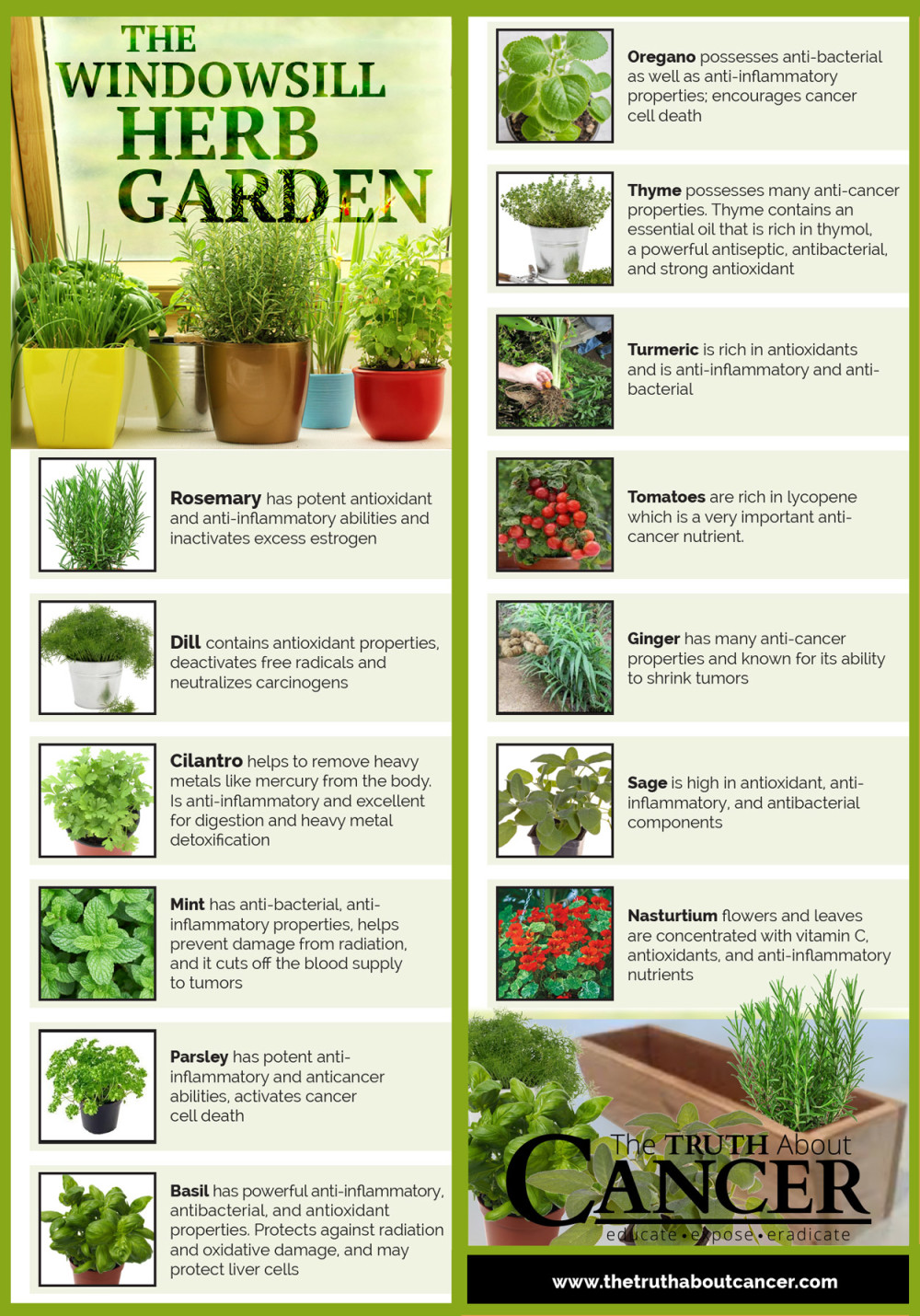
14 Cancer Fighting Herbs

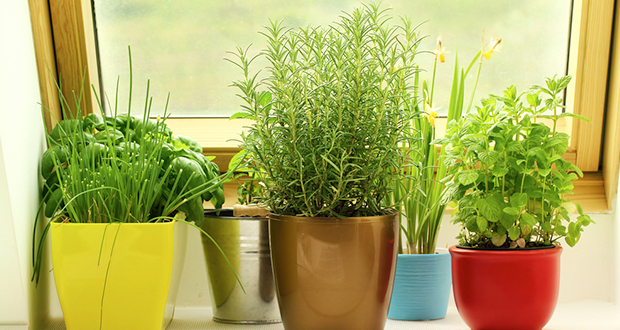
14 Cancer-Fighting Plants for Your Indoor Herb Garden

I love the spring and summer growing season. However, what I especially love about my herb garden is that I can enjoy it all year round. There is something very special about having fresh herbs and spices growing on the windowsill to snip for my pesto, salads, and smoothies. I derive great pleasure from watching them grow and smelling their fresh fragrance. If you have limited or no outdoor garden space, an indoor herb garden is the perfect solution for the hungry gardener.
I grow mint, basil, parsley, thyme, sage, rosemary, oregano, cilantro, nasturtium, Aloe Vera, ginger, turmeric, hot pepper, and cherry tomatoes. I love the freshness of freshly cut herbs and appreciate them for their numerous health benefits in an anti-cancer diet.

Benefits of an Indoor Herb Garden

Plants tend to lose their cancer-fighting benefits the longer they’re separated from their roots, so it’s ideal to pick herbs fresh and use them immediately in your cuisine.
Then there’s the emotional aspect. When you’re growing plants to use in your food, there is a special purpose and a completed cycle. There is also a connection to life that is personally fulfilling… the excitement when the seed produces its first leaves and then develops the flowers and finally the fruit. You just can’t wait to taste the fruit of your labor − literally.
Furthermore, the flavor of homegrown organic herbs is superior to supermarket produce so your meals have an added zing that is incomparable flavor and health-wise.

How to Plan & Grow Your Own Indoor Herb Garden

So, what do you need to get started?
  1. Make a plan of what you want to grow (see below for some plant suggestions).
  2. Choose a windowsill in a sunny location (south or southwest exposure for six consecutive hours in the day is best).
  3. Choose the types of pots you would like to use − hanging or windowsill ledge or both.
  4. You will also need to find an organic plant nursery, plant food, a table, newspaper, and a day or two to accomplish the task.
I go to the organic nursery and pick out the plants that I want to grow. I buy potting soil, compost, humus, organic plant food, pots or window boxes, plant hangers, and a misting bottle.

Putting Your Herb Garden Together

  1. After you get home with your purchases, gather some pebbles or small rocks to put in the base of the planters and hanging pots. Fill the bottom of each plantar/pot with a single layer of stones. This helps with drainage.
  2. Next, mix the soil in a bucket with one part each of compost, potting soil, and humus. (Note: You can also buy some potting soils that already combine all of these elements). Add the soil mixture to the planters, pots, and hanging pots you’ve selected.
  3. Water all the plants thoroughly, allow them to drain, and make a hole in the potting soil mixture for each plant.
  4. Place the plants in the planters and press firmly around the base of the plant and soil to set them in the planter.
  5. Wipe off the pots and planters and place them on the windowsill and/or install the triangular wall brackets for the hanging plants and put them on the hooks.

Ideas for What to Grow in Your Indoor Herb Garden

If you need a little inspiration, here is how I set up my own windowsill herb garden and why I choose these particular herbs and plants:
Mint is very easy to grow and goes well in a salad, smoothie, for garnishes, and many other culinary uses. It also adds a nice fragrance to the room and the flowers can be eaten for their trace minerals. There are several varieties available, but they all have similar flavors and health benefits.
Basil is important for pesto and complementing the spices in various dishes. It has anti-inflammatory, antioxidant, and tension soothing components. The aroma is very pleasant and relaxing as well.
Parsley is also nice in a window box so you might want to grow several plants and keep plenty on hand. It has many health benefits especially in salads and smoothies. Parsley is a great detoxifier and helps restore the alkaline balance in the body.
Oregano has many health benefits including immune boosting and cancer cell retarding properties. It will continue to grow all year long indoors so you can use it in many recipes. I like to give it a pot alone.
Thymesage, and rosemary are compatible in a box planter on the windowsill. Thyme is available in several varieties and is mostly used in salads, soups, and meat dishes. Sage is used in similar ways but is also good in tea for increasing brain function and its calming effects.
Rosemary is a nice herb for many uses in cooking, green smoothies, and aromatherapy. When you inhale the rosemary fragrance it clears your mind so it is easier to focus your thoughts.
Additionally, mint, sage, and rosemary are all high in antioxidant, anti-inflammatory, and antibacterial components.
Cilantro is excellent for digestion and heavy metal detoxification. It is anti-inflammatory, anti-spasmodic, an internal deodorizer, and is loaded with vitamins and minerals. It has a unique flavor that compliments many dishes including salad recipes, pesto, gazpacho, and guacamole. Its seeds (coriander) are very aromatic as well.
Nasturtium plants can be potted and hung from a hook made for hanging from the ceiling or wall triangle. They are beautiful flowers that come in several colors. Both the flower and leaves are edible with a spicy peppery taste that adds variety, trace minerals, and beauty to many dishes.
Nasturtium can be grown from seed or plants but you must be very careful in transferring the plants to a pot as the roots are very tender. A rich soil will produce more leaves and a poor soil produces more flowers. The flowers and leaves are concentrated with vitamin C, antioxidants, and anti-inflammatory nutrients. Nasturtium also heals infections of the throat and intestines while increasing blood circulation.
Aloe Vera is a plant that grows best in a pot on the windowsill or a plant stand near the window. This is because the spiky leaves can spread which may be too wide for the windowsill. Aloe Vera is a very important plant used for healing the skin from burns, blemishes, and scars. The inner gel is excellent to add to your smoothies (the flavor is unnoticeable) and it heals your internal tissues.
This is great if you have some damage from radiation therapy or chemo-induced tissue damage. So you want to plant more than one to be growing abundantly for daily or weekly use. Aloe is also very easy to grow and it will reproduce itself without any intervention.
Ginger (local ginger from a quality organic shop) can be placed in a glass with a toothpick going through the upper center. It should be balanced on the glass so the ginger is stable and the base is in the water to produce roots. Once the root hairs have formed the ginger can be put into the soil in a pot to develop its leaves and become a plant. After several months you can harvest some of the root while allowing the plant to continue growing.
Turmeric is cultivated in much the same way as ginger. It can also be placed directly in a pot of soil and watered regularly until the green shoots come up. Turmeric is an important anti-cancer spice and is a liver and blood purifier. It is rich in antioxidants, is anti-inflammatory, and anti-bacterial, and compliments almost everything − so it’s good to have plenty on hand.
Cherry tomatoes are nice to grow and pick fresh for your salads, casseroles, or just to snack on. They should be grown in a pot with a stick in the center to give the bush support when the tomatoes begin to develop. The pot can go on the windowsill, but a plant stand is also good depending on the depth of your windowsill. These small tomatoes are rich in lycopene which is a very important anti-cancer nutrient.

Make Fresh Herbs Part of Your Anti-Cancer Diet

This exercise should be fun for you and your family to do together. It will be very rewarding when you are able to pick the herbs and tomatoes and flowers and use them in your food. If you do have outdoor space for a garden, you can follow many of these same steps. Although herbs aren’t hardy in cold temperatures, plants can be brought indoors and overwintered in your sunniest window − for your year-round enjoyment.
It may look a little intimidating, but once you get started you will find it’s not as difficult as it sounds. If you feel overwhelmed, it may help to invite some gardening friends to do it with you. I like to have planting parties where several of my gardening friends get together on a morning or afternoon. We have tea and snacks while we get our hands dirty and generally make a mess.
However, we have a lot of fun getting excited about labeling the plants, making the pots, and putting the seedlings or baby plants in their pots. We move along watering and placing them on the windowsills, and hanging them from the wall or ceiling. It is well worth the time spent when you see the plants growing and you smell the fresh herbs.
You can delight in knowing you can clip them and mix them up for your recipes and teas. Drying them at the end of the growing season is also a great way to incorporate more herbs into your diet.
After you consume the fruits you should save the seeds for future planting. Some gardeners have seeds that have been handed down from generation to generation. These seeds are referred to as heirloom seeds. Then there are those special plants that you want to preserve and grow again because the fruit was especially good.
Always choose non-GMO seeds that have a high germination rate. Keep it as simple as possible at first and plant the seeds for plants that you know you will use on a regular basis. I have listed some suggestions but you should go for the ones that are the most useful (and delicious) to you. The plants will re-oxygenate your air and most will remove toxins from your indoor environment. Although plants serve more than one purpose… eating them is the most fun!
Windowshill-Herb-Garden-article

7 Amazing Cures For Breast Cancer - What You Need to Know to Save Your Life

You have read the alarming statistics. Every three minutes a woman in the United States is diagnosed with breast cancer. Old school methods like surgery, hormone treatments, radiation, and chemotherapy cause women great suffering without treating breast cancer. Women suffer through physical pain, financial devastation, degrading surgery, poor health, loss, depression, and ultimately poor results.
What alternatives cures are available for breast cancer? Follow 7 simple tips to cure breast cancer naturally.
Tip 1: Consume flaxseed oil daily.

Flaxseed oil, also known as linseed oil, can be taken as a vitamin, loose fibers, or in liquid form. When you purchase flax oil, make sure the bottle is labeled as a dietary supplement. You can add 1 to 2 tablespoons of flax oil to salad dressings, yogurt, smoothies, or simply drizzle it over steamed vegetables and cooked grains.
Canadian researchers gave women with breast cancer one muffin a day containing linseed oil and discovered that the women who ate the muffins reduced their cancer by over 42%. The linseed oil muffins appeared to be more effective than the radiation and chemotherapy treatments.
Flaxseed's anti-cancer elements and dietary nutrients have been promoted since the 1950s. In addition to fighting breast cancer, flaxseed is beneficial for constipation, abdominal problems, breathing problems, sore throat, eczema, menstrual problems, and arthritis. The omega-3 fatty acid in flaxseed is believed to be the source that prevents breast cancer,lowers cholesterol levels, and boosts the immune system.
Tip 2: Take Vitamin D.
Scientists have promoted that Vitamin D, which comes naturally from the sun, dramatically reduces the chances of developing breast, ovarian, and colon cancer.
Tip 3: Oral chelation.
Oral chelation means taking natural substances orally to be absorbed into the body. Once absorbed, the natural substance grabs hold of toxic materials in your body, such as minerals, metals, and chemicals, then carries the toxins out of your body through urine and bowel movements.
Typical ingredients in chelation are amino acids, trace minerals, vitamins, and herbs such as taheebo extract, golden seal, buchu leaf, couch grass, and juniper berries. Chelation is cheap, natural, and can create spectacular results.
Tip 4: Eat fresh lemons.

Lemons prevent diseases and cancer. Lemons contain phytochemicals, which are neither vitamins nor minerals. Phytochemicals are extremely efficient in the prevention of diseases and cancer in the human body.
Tip 5: Reduce stress.
According to the law of attraction, disease cannot exist in the body of a healthy mind. Remove any destructive elements in the soul that lead to division, strife, suffering, disease, and sorrow. The physical world without is a reflection of the world within your mind. You are in control of your mind. Learn Tai Chi, Qi-Gong, yoga, or study a philosophy that teaches inner peace.
Tip 6: Increase oxygen in your body.
An underlying cause of cancer is low cellular oxygenation levels. Poor oxygenation comes from a buildup of toxins within and around cells, causing red blood cells to clump up, slowing down the bloodstream, and restricting flow into capillaries. Increasing oxygen into your body will lower your acidic level to alkaline. Cancer cells do not survive in a normal alkaline environment.
You can increase oxygen in your body by doing breathing exercises as explained in The Yogi Science of Breath.
Tip 7: Laugh frequently and often!
Deborah Bravandt is the CEO of Alpha Omega Group, a power sweeping company and legal benefits provider. Deborah sponsors walkers for The Three Day breast cancer walk in San Diego. If you would like to get free ebooks on natural cures, breathing exercises, or you want to donate to The 3 Day Walk, visit us at [http://www.alphaomegasweeping.com/3daywalk] If you are interested in legal benefits, visit us at [http://www.bravandt.com]


Article Source: http://EzineArticles.com/994862

http://ezinearticles.com/?7-Amazing-Cures-For-Breast-Cancer---What-You-Need-to-Know-to-Save-Your-Life&id=99
4862